Eid Al Adha 2026 Date And Day In Pakistan
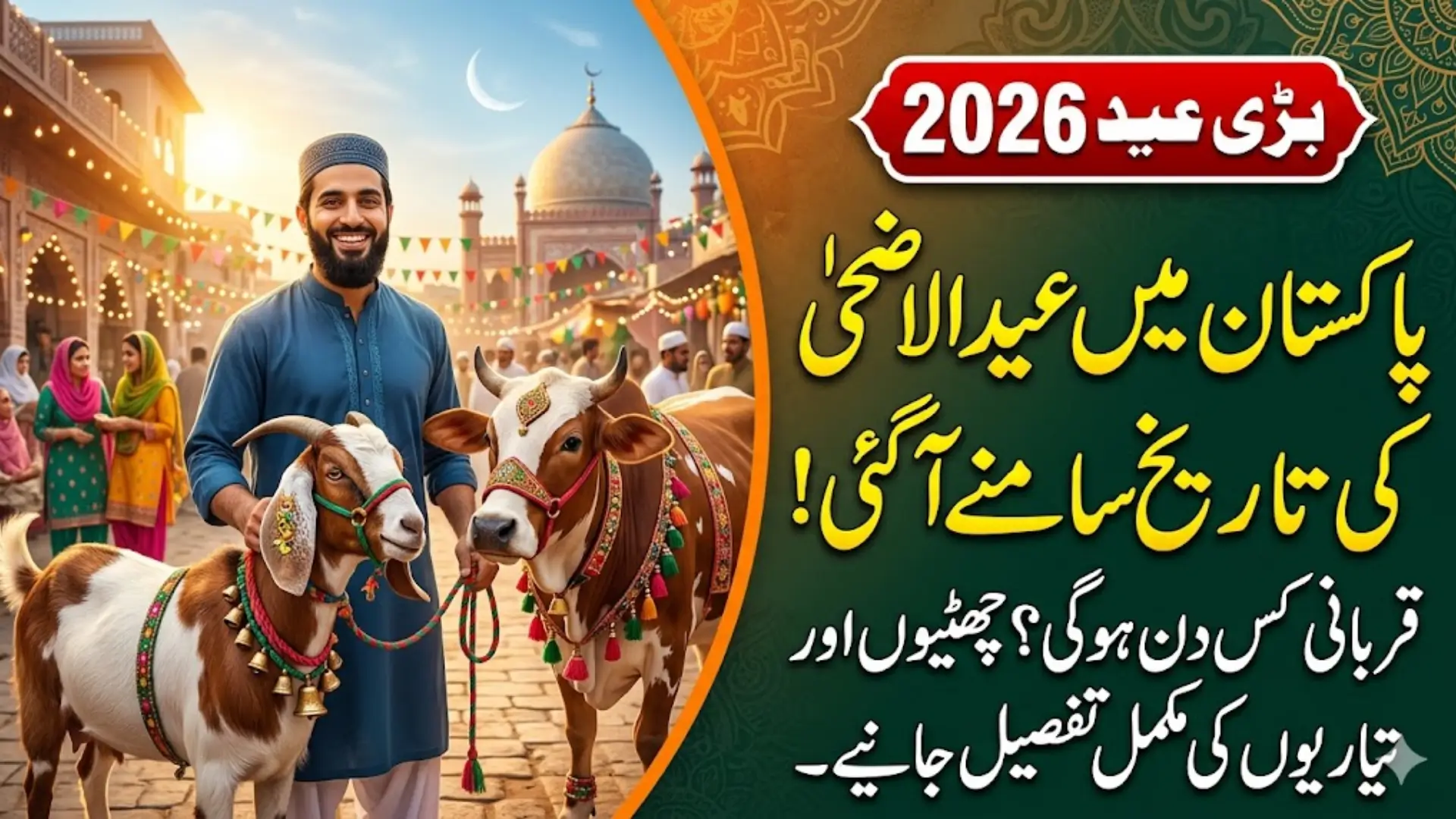
Eid Al Adha 2026 Date And Day In Pakistan is expected to be celebrated on Wednesday, 27 May 2026, according to the Islamic calendar. This important Islamic festival falls on 10 Dhul Hijjah 1447 AH and is observed by millions of Muslims across Pakistan with great religious devotion, family gatherings, and Qurbani rituals. However, the final Eid date will only be confirmed after the official moon sighting announcement by Pakistan’s Ruet-e-Hilal Committee.
For Muslims in Pakistan, Eid Al Adha is more than just a public holiday. It is a deeply spiritual occasion that reminds people about sacrifice, obedience to Allah, and helping those who are struggling financially. In every city, town, and village of Pakistan, preparations for Eid begin weeks before the actual day. From crowded cattle markets to busy shopping centers and packed roads, the excitement of Bakra Eid becomes visible everywhere.
The atmosphere before Eid Al Adha feels completely different in Pakistan. Children become emotionally attached to sacrificial animals, families start planning meat distribution, and people arrange gatherings with relatives and friends. In large cities like Lahore, Karachi, Faisalabad, Multan, and Islamabad, temporary cattle markets remain active day and night. At the same time, smaller towns and villages also witness traditional animal trading that has been part of Pakistani culture for decades.
You Can Also Read: Wazir-E-Azam Apna Ghar Program 2026
Expected Eid Al Adha 2026 Date in Pakistan
According to Islamic calendar predictions, Eid Al Adha 2026 in Pakistan is expected to fall on 27 May 2026. Since Islamic months depend on moon sighting, the exact date may slightly change depending on the visibility of the Dhul Hijjah moon in different parts of the country.
Every year, Pakistani citizens closely follow moon sighting updates because Eid celebrations officially begin after the announcement. The Ruet-e-Hilal Committee holds meetings with religious scholars and experts to confirm the crescent sighting. Television channels, social media pages, and mosques quickly spread the official announcement across the country.
Expected Eid Al Adha 2026 Schedule
| Islamic Event | Expected Date in Pakistan |
|---|---|
| 1st Dhul Hijjah 1447 | 18 May 2026 |
| Hajj Day (9 Dhul Hijjah) | 26 May 2026 |
| Eid Al Adha 2026 | 27 May 2026 |
| Qurbani Days | 27 to 29 May 2026 |
Many people in Pakistan also search online for “Bakra Eid 2026 date in Pakistan,” “Eid ul Adha holidays 2026,” and “Qurbani date 2026 Pakistan” as Eid approaches. This shows how important the festival is for families planning travel, shopping, and sacrifice arrangements.
You Can Also Read: Prime Minister Apna Ghar Program
What is Eid Al Adha and Why is it Celebrated?
Eid Al Adha is known as the Festival of Sacrifice. It commemorates the remarkable obedience of Prophet Ibrahim (AS), who was willing to sacrifice his beloved son after receiving Allah’s command in a dream. Before the sacrifice could happen, Allah replaced his son with a ram, showing that sincerity and faith are more important than the sacrifice itself.
This event is remembered every year by Muslims worldwide through Qurbani, where animals are sacrificed in the name of Allah. The story teaches Muslims powerful lessons about patience, loyalty, sacrifice, and complete trust in Allah’s decisions.
In Pakistan, religious scholars explain that Eid Al Adha is not only about sacrificing animals. The real spirit of this Eid is sacrificing selfishness, helping poor people, and building unity within society. During sermons and Eid khutbahs, people are reminded that Islam promotes equality, kindness, and support for the needy.
Important lessons Muslims learn from Eid Al Adha include:
- Obedience to Allah’s command
- Importance of sacrifice in life
- Sharing blessings with poor families
- Building unity and brotherhood
- Helping deserving people during difficult times
- Remembering the Sunnah of Prophet Ibrahim (AS)
In Pakistani culture, these values become visible during Eid when families distribute meat among neighbors, relatives, and poor communities without discrimination.
You Can Also Read: Wazir-e-Azam Apna Ghar Program 2026
Importance of Qurbani in Pakistan
Qurbani is one of the most important acts of worship during Eid Al Adha. Muslims who are financially stable perform the sacrifice of animals such as goats, sheep, cows, or camels after the Eid prayer. This practice follows the Sunnah of Prophet Ibrahim (AS) and holds deep religious significance.
In Pakistan, Qurbani is not only a religious responsibility but also an emotional and social tradition. Families spend weeks selecting healthy animals from local cattle markets. Children feed the animals, decorate them with colorful ropes and bells, and often develop emotional attachment before Eid day arrives.
The excitement in Pakistani cattle markets becomes a major attraction before Eid. Traders bring animals from Punjab, Sindh, Balochistan, and Khyber Pakhtunkhwa to major cities. Buyers carefully check the animal’s health, age, and appearance before making a purchase.
You Can Also Read: Apni Chhat Apna Ghar Program 15 Lakh Loan
Animals commonly used for Qurbani in Pakistan include:
- Goats
- Sheep
- Cows
- Bulls
- Camels
Many middle-class families prefer collective cow Qurbani because it is more affordable. In large cities, online Qurbani shares have also become increasingly popular due to busy lifestyles and limited space at homes.
Islam also teaches Muslims to treat sacrificial animals kindly. Feeding them properly, avoiding cruelty, and performing sacrifice according to Islamic methods are all considered essential parts of Qurbani.
How Qurbani Meat is Distributed Among People
One of the most beautiful aspects of Eid Al Adha is the distribution of meat among family members, relatives, friends, and poor people. Islam encourages Muslims to share their blessings so everyone can enjoy the happiness of Eid equally.
Traditionally, Qurbani meat is divided into three equal parts. One portion is kept for the family, one is distributed among relatives and friends, and the third portion is given to poor and deserving families.
In Pakistan, many people personally deliver meat to nearby homes and underprivileged communities. This tradition strengthens social relationships and promotes compassion within society. In villages especially, it is common to see people visiting homes with meat portions throughout the Eid holidays.
Benefits of meat distribution during Eid include:
- Poor families receive fresh meat
- Stronger community relationships
- Promotion of charity and kindness
- Equal participation in Eid happiness
- Support for financially struggling households
For many low-income families in Pakistan, Eid Al Adha may be the only time in the year when they can cook and eat meat properly. This is why the spirit of sharing is considered one of the most important parts of the festival.
You Can Also Read: Apni Chhat Apna Ghar Program 2026 Online Application
Connection Between Eid Al Adha and Hajj
Eid Al Adha has a direct connection with Hajj, the annual Islamic pilgrimage to Makkah. During these same days, millions of Muslims from around the world gather in Saudi Arabia to perform Hajj rituals.
Pilgrims perform important acts of worship including staying at Arafat, spending the night in Muzdalifah, and sacrificing animals in Mina. Muslims around the world celebrate Eid Al Adha at the same time, creating a strong feeling of global Islamic unity.
In Pakistan, many families closely follow Hajj coverage on television channels during Eid days. Emotional scenes of pilgrims praying in Makkah and Mina create a spiritual atmosphere inside homes.
Major Hajj rituals connected with Eid include:
- Wuquf at Arafat
- Stay in Muzdalifah
- Rami at Mina
- Animal sacrifice after Hajj
- Tawaf and prayers at Kaaba
Pakistani pilgrims travel in large numbers every year, and their families often celebrate Eid with special prayers for their safe return.
You Can Also Read: Wazir-e-Azam Apna Ghar Program 2026
Eid Al Adha Preparations in Pakistani Cities and Villages
Preparations for Eid Al Adha start many days before the festival. Markets become crowded, shopping malls offer discounts, and cattle markets attract thousands of buyers daily.
In urban areas, people focus on buying animals, arranging freezers, purchasing new clothes, and preparing for guests. In villages, however, Eid preparations often feel more traditional and community-based. Neighbors help each other, and animal care becomes a shared activity.
Common Eid preparations in Pakistan include:
- Purchasing sacrificial animals
- Cleaning homes and streets
- Buying clothes for children
- Arranging knives and tools
- Preparing refrigerators and freezers
- Organizing family gatherings
- Planning barbecue parties
In many cities, municipal authorities also launch cleanliness campaigns before Eid. Public announcements are made asking citizens to maintain hygiene during Qurbani days.
You Can Also Read: Wazir-E-Azam Apna Ghar Program
Online Qurbani Services in Pakistan 2026
Online Qurbani services have become extremely popular in Pakistan over the last few years. Many Islamic welfare organizations and charities now offer online sacrifice options for people who cannot manage Qurbani personally.
These services are especially useful for overseas Pakistanis and busy families living in apartments or urban areas. People can select animals online, pay digitally, and receive confirmation after the sacrifice is completed.
Advantages of online Qurbani services include:
- Saves time and effort
- Professional meat distribution
- Hygienic sacrifice process
- Easier for overseas Pakistanis
- Meat reaches deserving families quickly
Many charitable organizations also perform Qurbani in underdeveloped areas where poor families urgently need food support during Eid days.
Sunnahs and Islamic Practices of Eid Al Adha
Eid Al Adha begins with special Sunnahs and Islamic practices that Muslims follow before offering Eid prayer. People wake up early in the morning, take a bath, wear clean clothes, apply perfume, and prepare for prayer.
The sound of Takbeer can be heard from mosques and streets across Pakistan during Eid mornings. Families walk together towards Eid grounds while greeting each other warmly.
Important Sunnahs of Eid Al Adha include:
- Taking bath before Eid prayer
- Wearing clean or new clothes
- Applying perfume
- Reciting Takbeer loudly
- Offering Eid prayer in congregation
- Listening carefully to Eid khutbah
- Performing Qurbani after Eid prayer
Religious scholars in Pakistan continuously remind people that simplicity, cleanliness, and helping poor families are more important than showing wealth during Eid celebrations.
Safety and Hygiene During Qurbani Days
During Eid Al Adha, cleanliness becomes a major concern because thousands of animals are sacrificed across Pakistan within a short period. Local governments and municipal authorities usually deploy extra sanitation workers to manage waste collection.
Citizens are encouraged to avoid throwing animal waste on roads or in open areas. Proper cleaning not only protects public health but also reflects Islamic teachings about hygiene and responsibility.
Important safety and hygiene tips include:
- Use clean knives and tools
- Store meat immediately in refrigerators
- Keep sacrifice areas clean
- Dispose of waste properly
- Wash hands regularly
- Avoid leaving meat in open sunlight
In recent years, many Pakistani cities have introduced special waste collection points and helpline services during Eid holidays to improve sanitation conditions.
How Families Celebrate Eid Al Adha in Pakistan
Eid Al Adha celebrations in Pakistan are filled with family gatherings, delicious food, and social visits. After Qurbani, families cook traditional dishes and invite relatives and friends for meals.
The smell of BBQ, karahi, biryani, and tikka spreads through neighborhoods as people celebrate together. Children receive Eidi from elders, while women prepare special desserts and traditional foods for guests.
Popular Eid dishes in Pakistan include:
- Beef Biryani
- Mutton Karahi
- Seekh Kebabs
- BBQ Tikka
- Pulao
- Nihari
- Qeema dishes
In villages, celebrations often continue late into the night with collective dinners and gatherings. In cities, rooftop BBQ parties and family get-togethers have become very common during Eid holidays.
Final Words
Eid Al Adha 2026 in Pakistan is expected to bring another season of sacrifice, faith, unity, and generosity for millions of Muslims across the country. From crowded cattle markets to emotional Eid prayers and meat distribution among poor families, every part of this festival carries deep Islamic meaning.
For Pakistani families, Eid Al Adha is not simply about sacrificing animals. It is a reminder of obedience to Allah, care for humanity, and support for those who are struggling financially. The true spirit of this Eid can be seen when neighbors help each other, relatives gather together, and deserving families receive food and happiness.