
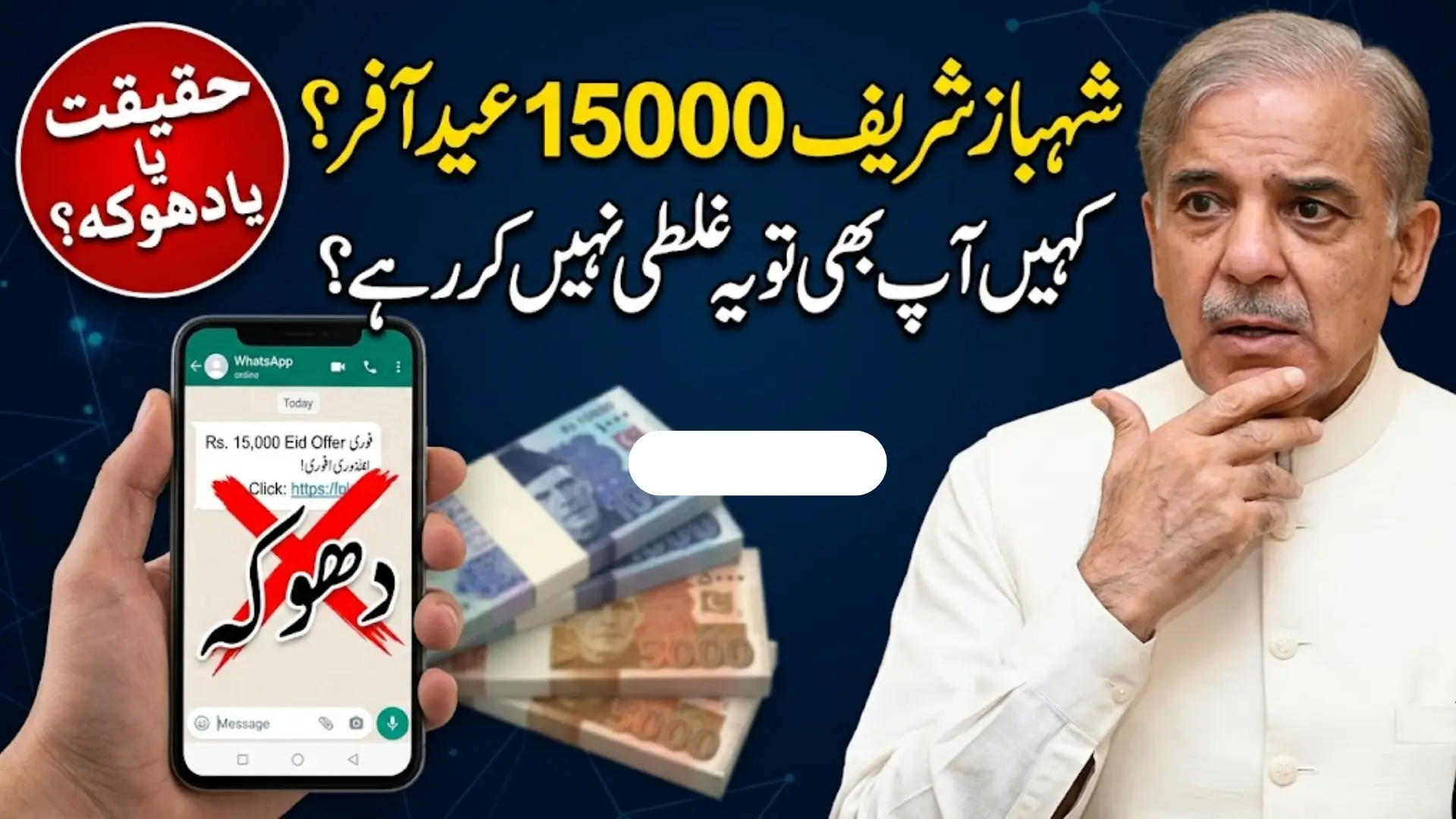
Shahbaz Sharif Eid Offer
Shahbaz Sharif Eid Offer In Pakistan, social media has once again become full of viral claims about a new financial assistance scheme called the “Shahbaz Sharif Eid Offer 15000.” Over the last few days, thousands of people have received WhatsApp messages, Facebook posts, TikTok videos, and website links claiming that Prime Minister Shehbaz Sharif is giving Rs. 15,000 cash to every family before Eid 2026. These posts are spreading very quickly because many families are already struggling with inflation, rising electricity bills, and daily expenses.
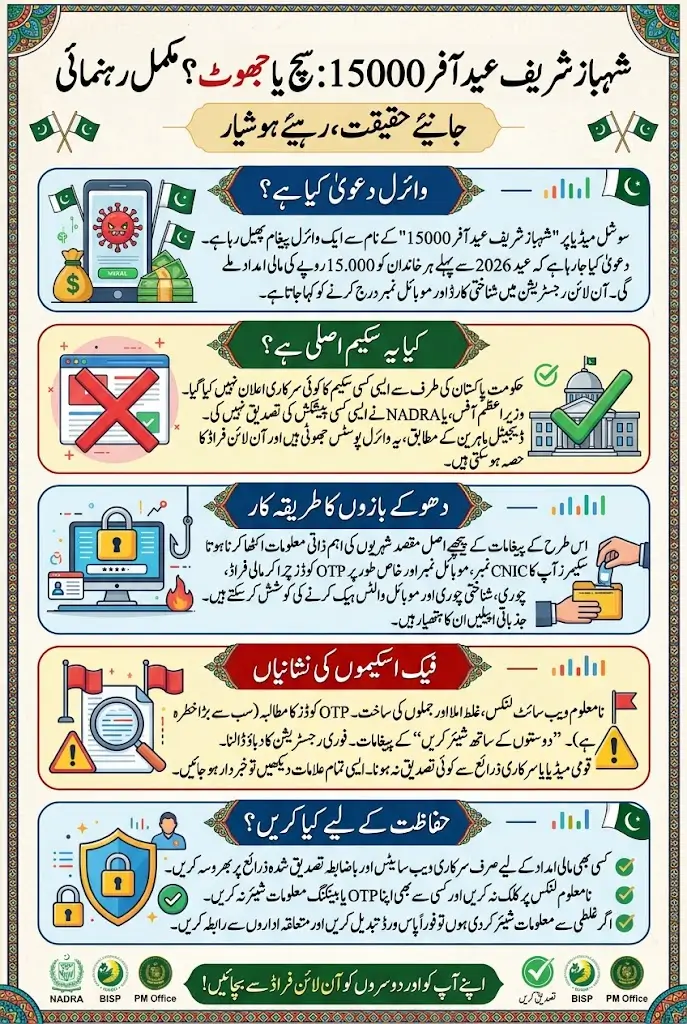
Most of the viral messages encourage people to register online by entering their CNIC number and mobile details. Some links also ask users to share the message with others before applying. Because the posts look emotional and urgent, many people believe the offer is genuine without checking official sources. In small cities and villages especially, these messages are spreading rapidly through WhatsApp groups where users trust forwarded information easily.
The truth is that no official announcement has been made by the Government of Pakistan regarding any scheme called “Shahbaz Sharif Eid Offer 15000.” Digital experts and cybersecurity analysts are warning citizens to stay careful because many of these viral posts appear to be fake or part of online phishing scams. Understanding the reality behind these offers is extremely important because scammers often use emotional situations like Eid to target innocent people.
You Can Also Read: Electricity Bill Subsidy Last Date to Apply Online
What Is Shahbaz Sharif Eid Offer 15000?
The Shahbaz Sharif Eid Offer 15000 is a viral online claim stating that the federal government is providing Rs. 15,000 financial assistance to deserving families as an Eid package in 2026. According to these messages, users only need to click a registration link, submit their CNIC details, and complete a simple online form to receive the amount.
Many of these posts use emotional wording to create excitement among users. Some messages say the money is only available for poor families, while others claim every Pakistani household can apply. Several fake websites also use pictures of Prime Minister Shehbaz Sharif, government logos, or fake approval messages to make the scheme appear authentic.
The main purpose of these tactics is to build public trust quickly. Once people believe the offer is real, they are more likely to share their personal information without thinking carefully about security risks. This is one of the most common methods used by scammers in Pakistan during Eid, Ramzan, floods, or other national situations where people expect government relief packages.
Common claims seen in viral Eid Offer posts include:
- Rs. 15,000 Eid gift for every family
- Online registration started
- Submit your CNIC immediately
- Limited-time government package
- Eid relief for poor citizens
- Apply before registration closes
- Share the offer with relatives and friends
Most of these messages create urgency so users react quickly instead of verifying facts from official sources.
You Can Also Read: Akar Pulse Gov Pk Portal For Apna Khet Apna Rozgar Scheme
Is Shahbaz Sharif Eid Offer 15000 Real or Fake?
At the moment, there is no verified evidence proving that the Government of Pakistan has launched any scheme called “Shahbaz Sharif Eid Offer 15000.” No official notification has been issued by the Prime Minister’s Office, BISP, NADRA, or any federal ministry regarding such a package.
Real government relief schemes in Pakistan are usually announced through official press conferences, television news channels, government websites, and verified social media accounts. Whenever the government launches programs like Ramzan packages, BISP payments, or subsidy schemes, complete details are publicly shared with citizens. These details normally include eligibility criteria, registration procedures, official helplines, and deadlines.
In the case of this viral Eid Offer 15000, none of these official procedures exist. Instead, the scheme is mostly spreading through random social media pages, suspicious websites, and forwarded WhatsApp messages. Many of the links also redirect users to low-quality websites filled with spelling mistakes and misleading advertisements.
Several cybersecurity experts believe these messages are part of phishing scams designed to collect personal information from citizens. Scammers often use fake government offers because people naturally trust financial assistance programs connected to the government.
Important reasons why this scheme appears suspicious:
- No official government confirmation exists
- National news channels have not verified the offer
- Fake websites are collecting CNIC numbers
- Unknown links are being shared online
- Most posts use emotional pressure tactics
- Registration procedures look unofficial
People should understand that if a government scheme is genuine, it will always be publicly announced through trusted and verified channels.
How Fake Eid Schemes Spread Across Social Media
Social media platforms have made it very easy for fake information to spread within minutes. In Pakistan, WhatsApp groups play a major role in spreading viral messages because people often trust information shared by family members and friends. Once one person forwards a fake message, it quickly reaches hundreds of others.
Scammers carefully design these campaigns to target emotional situations. During Eid, many low-income families hope for financial support from the government. Fraudsters use this hope to attract attention and convince users to click on dangerous links. Some posts even claim that registration is closing soon, forcing people to act quickly without checking authenticity.
Another reason these scams spread rapidly is the lack of digital awareness among the public. Many users cannot identify fake websites or phishing links. They believe any post containing a government logo or politician’s image must be genuine. In reality, scammers can easily copy official pictures and create fake pages within minutes.
You Can Also Read: BISP Kafalat Update 2026 IMF Pushes
Common platforms where fake Eid schemes spread include:
- WhatsApp groups
- Facebook pages
- TikTok videos
- YouTube thumbnails
- Telegram channels
- Fake blogs and websites
In some cases, users are even asked to share the message with ten or more people before registration becomes active. This trick helps scammers make the fake offer viral within a very short time.
How Scammers Collect Personal Information
The main goal behind most fake Eid schemes is not to provide money but to collect valuable personal information from users. Many people do not realize how dangerous it can be to share CNIC numbers, mobile numbers, OTP codes, or banking details online.
Once a user enters information on a fake website, scammers may store that data for future fraud activities. In some situations, criminals try to access mobile wallets, online banking accounts, or SIM registrations using stolen information.
Cybercriminals commonly misuse personal data for:
- Identity theft
- Fake account creation
- Financial fraud
- Mobile wallet hacking
- Illegal SIM registration
- Online scams using stolen identities
Some fake websites also ask users to enter OTP verification codes sent to their mobile numbers. OTP codes are extremely sensitive because they provide direct access to financial or digital accounts. Sharing them can result in hacked accounts or stolen money.
Citizens should understand that genuine government schemes never ask users to share confidential banking passwords or OTP codes through random online links.
You Can Also Read: Apna Khet Apna Rozgar Online Registration
Warning Signs That Show a Scheme Is Fake
There are several clear signs that can help people identify fake online schemes. Unfortunately, many users ignore these warnings because they focus only on the promise of financial assistance.
One of the biggest signs is poor website quality. Fake websites often contain spelling mistakes, broken pages, and excessive advertisements. Many also use suspicious website addresses that do not match official government domains.
Another major warning sign is emotional pressure. Scammers intentionally create urgency by saying things like “apply immediately” or “limited registration.” Their goal is to stop users from thinking carefully before submitting information.
The table below explains some common warning signs of fake government schemes:
| Warning Sign | Possible Meaning |
|---|---|
| Unknown website links | Fake or phishing website |
| Poor grammar and spelling | Unprofessional and suspicious content |
| Requests for OTP codes | Serious fraud risk |
| “Share with friends” messages | Viral scam tactic |
| No trusted media coverage | Information likely fake |
| Urgent registration pressure | Emotional manipulation tactic |
People should always verify online information before clicking on links or submitting personal details.
You Can Also Read: Cm Punjab Solar Panel Scheme Online Apply 2026
How Genuine Government Schemes Are Announced
In Pakistan, authentic relief programs follow proper legal and administrative procedures before becoming public. Government departments usually issue official notifications and conduct press conferences to explain how citizens can apply.
Real schemes are also covered by national television channels, newspapers, and official social media accounts. Transparent information is provided regarding eligibility requirements, registration deadlines, and payment methods. Citizens can also contact official helplines if they have questions.
For example, programs related to BISP, Ramzan subsidies, or utility relief packages are announced through verified government portals. These schemes also provide secure registration systems instead of random third-party websites.
Features commonly found in real government schemes:
- Official registration portals
- Transparent eligibility criteria
- Proper customer support
- Government press releases
- National media coverage
- Verified social media announcements
If a scheme lacks these basic features, citizens should become cautious immediately.
Why Poor Families Become Easy Targets
Pakistan’s economic situation has made financial assistance offers extremely attractive for many families. Inflation, unemployment, and rising utility bills have increased public interest in any news related to government relief packages.
Scammers understand this reality very well. They intentionally target poor and deserving families because such users are more likely to trust financial support messages during Eid. Emotional headlines promising free money create hope among struggling citizens, especially in rural areas where digital awareness is lower.
Elderly people are also common targets because many are unfamiliar with cybersecurity risks. They may not understand the difference between official government websites and fake links shared on social media.
Groups most commonly targeted by scammers include:
- Low-income families
- Elderly citizens
- Less educated users
- Rural social media users
- Individuals searching for government aid
This is why awareness campaigns about online fraud are becoming increasingly important across Pakistan.
You Can Also Read: National Savings 1500 Prize Bond Draw Results
Step By Step Guide To Verify Government Schemes
Citizens should always verify any financial assistance program before applying online. A few simple checks can protect people from major scams and identity theft.
Step 1 – Visit Official Government Websites
Always check official government portals first. Real schemes are announced through verified domains connected to government departments.
Step 2 – Watch National News Channels
Trusted television channels usually report important relief schemes immediately after official announcements.
Step 3 – Verify Social Media Accounts
Only trust verified social media pages of government institutions instead of random Facebook posts.
Step 4 – Avoid Unknown Links
Never click suspicious links shared in WhatsApp groups or TikTok comments.
Step 5 – Protect OTP and Banking Information
Do not share OTP codes, ATM details, or banking passwords with anyone online.
Step 6 – Discuss With Family Members
Before applying, ask knowledgeable family members or friends to verify the information together.
Following these simple steps can prevent serious financial and digital fraud.
What To Do If You Already Shared Your Information
Many people realize too late that they entered personal information on a suspicious website. If this happens, immediate action becomes very important because scammers may try to misuse the data quickly.
The first step is changing passwords connected to email accounts, mobile wallets, and banking applications. Users should also monitor their accounts regularly for unusual activity. If financial information was shared, contacting the relevant bank immediately is strongly recommended.
Important actions to take immediately:
- Change important passwords
- Secure banking applications
- Monitor suspicious transactions
- Contact customer support if needed
- Report fake websites to authorities
- Warn family members about the scam
Quick action can reduce the chances of identity theft or financial loss.
Growing Need For Digital Awareness In Pakistan
Pakistan is rapidly moving toward digital services, online payments, and social media communication. However, public awareness regarding online scams is still very limited. Many citizens cannot identify phishing links, fake websites, or fraudulent registration forms.
As internet usage increases, scammers are also becoming more active and professional. Fake government schemes, lottery scams, and financial fraud cases are now very common across Facebook, WhatsApp, and TikTok.
Experts believe digital awareness should become part of public education campaigns. Citizens must learn basic online safety skills to protect themselves and their families from fraud.
Important digital safety habits include:
- Verifying information before sharing
- Avoiding suspicious websites
- Using strong passwords
- Keeping OTP codes private
- Following trusted news sources only
Public awareness is the strongest defense against online scams.
Conclusion
The viral “Shahbaz Sharif Eid Offer 15000 currently appears to be fake or unverified because no official announcement has been made by the Government of Pakistan. Most of the posts circulating online are being shared through WhatsApp, Facebook, TikTok, and suspicious websites that may be collecting personal information from users.
Pakistani citizens should remain careful and avoid submitting CNIC numbers, OTP codes, or banking information on unknown websites. Genuine government relief schemes are always announced through official channels, trusted media platforms, and verified registration systems