
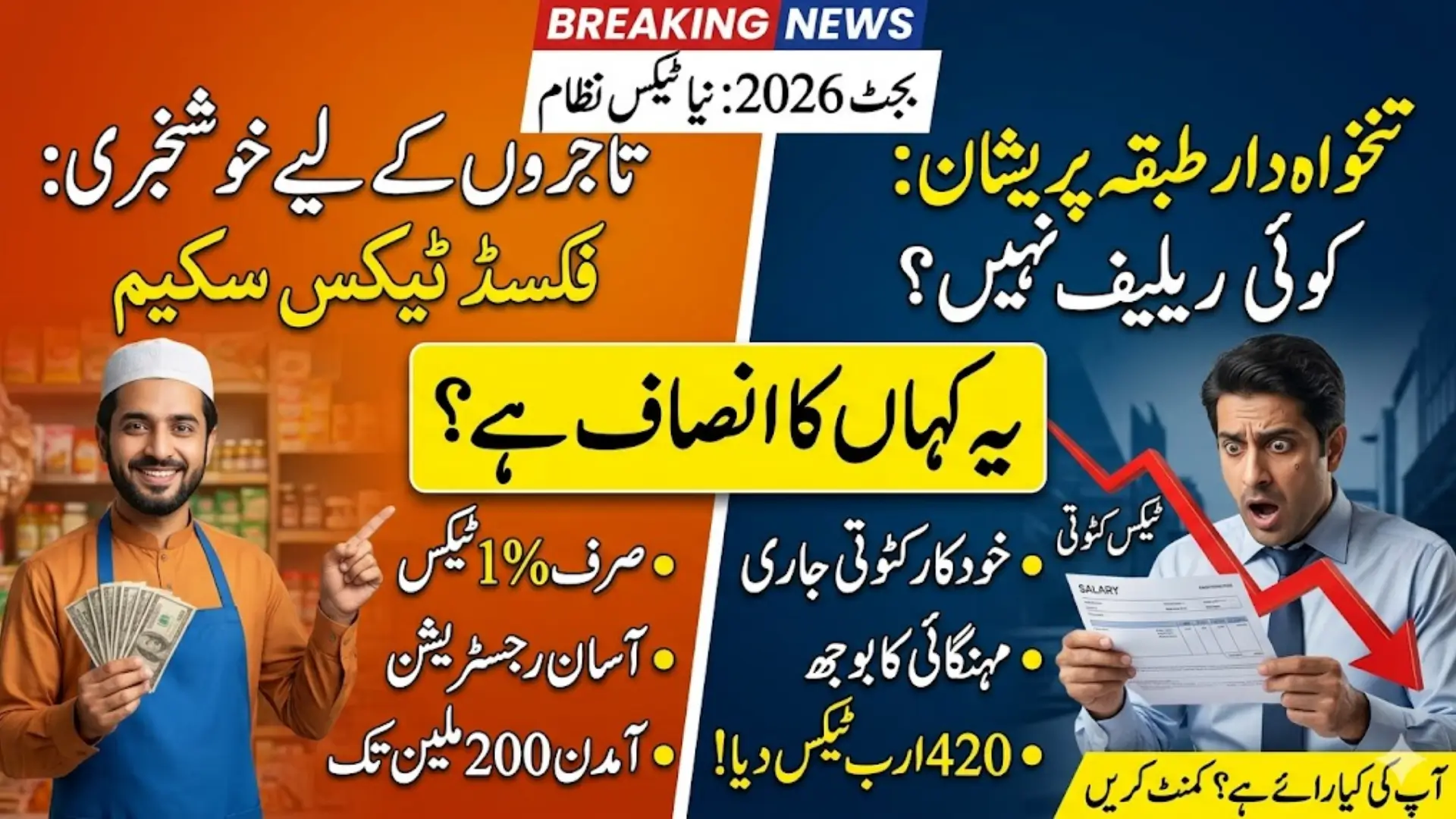
Fixed Tax Scheme Announced
Fixed Tax Scheme Pakistan’s tax system has once again become a topic of public discussion after the government introduced a new fixed tax scheme for retailers and small traders. While the move is being presented as a way to bring more businesses into the tax net, many salaried employees are asking a simple question: where is the relief for the people who already pay their taxes regularly?
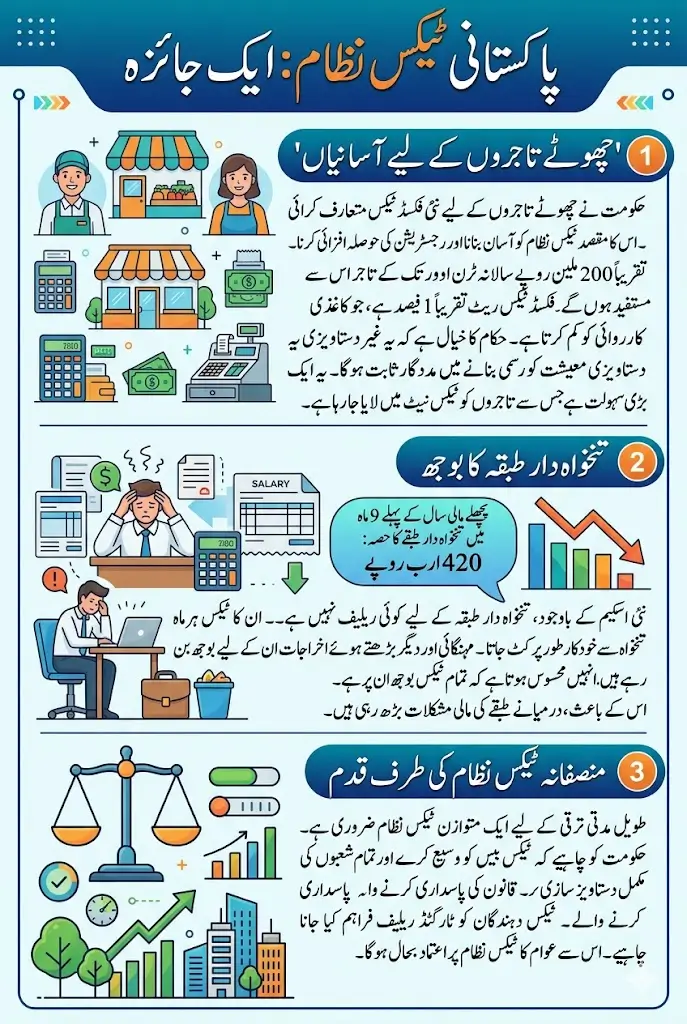
The debate has become stronger because salaried workers continue to face rising tax deductions while new facilities and simplified tax options are being offered to other sectors. As the federal budget approaches, many taxpayers are hoping that the government will also address the concerns of the middle class and salaried community.
You Can Also Read: Govt Decrease Petrol Price Again But Diesel Price Remains
New Tax Policy Raises Questions About Fairness
The government recently announced a simplified tax regime aimed at retailers and small businesses. Under this system, eligible traders with annual sales up to around Rs. 200 million can choose a fixed tax arrangement with easier filing procedures.
Officials believe this step will encourage more businesses to register and become part of the formal economy. However, many people working in private companies, banks, educational institutions, and government departments believe the policy creates a visible difference between how various sectors are taxed.
For salaried employees, taxes are deducted every month without delay. In contrast, businesses operating largely in cash-based markets often have greater flexibility when it comes to tax reporting and documentation.
You Can Also Read: Big Relief for Farmers Punjab Launches
Understanding the New Fixed Tax Scheme
The fixed tax scheme is designed to simplify tax compliance for small traders and retailers. Instead of dealing with complicated calculations and extensive paperwork, eligible businesses can pay tax based on a fixed percentage of their turnover.
Some key features of the scheme include:
- Simplified tax filing process
- Lower compliance requirements
- Fixed tax rate of around 1 percent
- Eligibility for businesses with turnover up to approximately Rs. 200 million
- Encouragement for undocumented businesses to enter the tax system
The government argues that simplified taxation can improve registration rates and increase overall revenue collection in the long run. Supporters of the policy say that many small businesses avoid registration because of complicated procedures, and this scheme may help solve that problem.
You Can Also Read: Budget 2026 Interest-Free E-Bikes and Taxi Scheme
Why Salaried Employees Feel Left Behind
While traders have been offered a new option, no major relief package has been announced for salaried taxpayers. This has increased frustration among employees who already contribute a significant portion of direct tax revenue.
Many salaried individuals believe they are carrying a larger share of the tax burden because their income is fully documented. Every salary payment is recorded, and taxes are deducted before the employee even receives the money.
The concern is not only about income tax. Salaried families also face increasing expenses due to inflation, utility bills, fuel prices, and other daily costs. As a result, many people feel that the middle class is under pressure from multiple directions.
Pakistan Current Income Tax Structure for Salaried Individuals
Pakistan follows a progressive tax system for salaried persons. This means tax rates increase as income rises.
Current Income Tax Slabs
| Annual Income | Monthly Income | Tax Rate |
|---|---|---|
| Up to Rs. 600,000 | Up to Rs. 50,000 | No Tax |
| Rs. 600,001 – Rs. 1.2 Million | Rs. 50,001 – Rs. 100,000 | 1% on amount above Rs. 600,000 |
| Rs. 1.2 Million – Rs. 2.2 Million | Rs. 100,001 – Rs. 183,333 | Rs. 6,000 + 11% |
| Rs. 2.2 Million – Rs. 3.2 Million | Rs. 183,334 – Rs. 266,667 | Rs. 116,000 + 23% |
| Rs. 3.2 Million – Rs. 4.1 Million | Rs. 266,668 – Rs. 341,667 | Rs. 346,000 + 30% |
| Above Rs. 4.1 Million | Above Rs. 341,667 | Rs. 616,000 + 35% |
As income increases, taxpayers move into higher tax brackets. For professionals and middle-income earners, this often means a noticeable portion of their salary goes directly toward taxes.
Many employees argue that these rates become more difficult to manage when inflation reduces purchasing power and household expenses continue to rise.
You Can Also Read: Fuel Subsidy Program Beneficiaries to Receive 5th and 6th
Salaried Class Contributed Rs. 420 Billion in Taxes
According to available figures, the salaried class contributed approximately Rs. 420 billion in taxes during the first nine months of the outgoing fiscal year. This amount highlights the importance of salaried taxpayers in Pakistan’s revenue system.
The contribution is particularly significant because the collection process is highly transparent. There is very little room for underreporting since taxes are deducted directly through employers.
Many economic observers believe that such a large contribution strengthens the argument for providing targeted relief to salaried workers in future budgets.
Why Salaried Tax Collection Remains Strong
- Tax is deducted automatically from salaries
- Employers act as withholding agents
- Payroll records are fully documented
- Compliance levels remain extremely high
- Income can easily be tracked by authorities
This system ensures stable revenue collection for the government but also places a consistent burden on employees.
Automatic Tax Deductions Leave No Escape Route
One major difference between salaried employees and many other sectors is the method of tax collection. Workers do not have the option to delay, negotiate, or avoid deductions because taxes are removed before salaries are credited.
For many households, monthly salary is the primary source of income. When taxes are deducted automatically, families must manage all other expenses from the remaining amount.
This situation becomes more challenging when inflation increases the cost of food, transportation, education, healthcare, and utilities.
Comparing Traders and Salaried Workers
The debate surrounding tax fairness often focuses on the differences between trader taxation and salary taxation.
Comparison of Both Tax Systems
| Feature | Salaried Employees | Retailers Under Fixed Scheme |
|---|---|---|
| Tax Basis | Income | Turnover |
| Collection Method | Automatic Deduction | Self-Declaration |
| Documentation | Fully Documented | Simplified Reporting |
| Compliance Level | Very High | Depends on Registration |
| Flexibility | Limited | Comparatively Higher |
| Tax Calculation | Progressive Rates | Fixed Rate System |
The table clearly shows that both groups operate under different tax frameworks. While the government aims to increase trader registration through incentives, salaried employees continue to function under a strict compliance system.
The Hidden Tax Burden on Middle-Class Families
Income tax is not the only financial burden faced by salaried citizens. Many households pay additional taxes through daily consumption.
These include:
- Electricity bill taxes
- Mobile phone taxes
- Internet service taxes
- Fuel-related taxes
- Sales tax on consumer goods
- Banking transaction charges
Because these expenses affect everyday life, many middle-class families feel the impact more strongly than higher-income groups or businesses that can pass costs on to customers.
As inflation remains a concern, these indirect taxes further reduce disposable income.
You Can Also Read: BISE Lahore Inter Part 1 Exams 2026
Public Demand for Equal Tax Treatment
The announcement of the fixed tax scheme has generated significant discussion among economists, professionals, and ordinary citizens. Many people support efforts to expand the tax base but believe all sectors should be treated fairly.
Several voices have suggested that genuine tax reform should focus on:
- Broadening the tax net
- Reducing dependence on existing taxpayers
- Improving documentation across all sectors
- Offering relief to compliant taxpayers
- Creating a more balanced tax structure
These suggestions continue to gain attention as the government prepares future fiscal policies.
What Salaried Employees Expect From the Upcoming Budget
With the next federal budget approaching, salaried taxpayers are hoping for practical measures that can reduce financial pressure.
Common demands include:
- Lower income tax rates
- Revision of tax slabs
- Higher tax-free income limits
- Relief for middle-income earners
- Reduction in withholding taxes
- Protection against inflation-related pressures
Many employees believe these steps could restore confidence in the tax system and reward those who already comply with tax laws.
You Can Also Read: Saudi Riyal To PKR Convert Currency
A Fair Tax System Is Essential for Long-Term Growth
The discussion surrounding Pakistan’s new fixed tax scheme highlights a larger issue: balancing revenue collection with fairness. The government wants to increase tax collection and bring more businesses into the formal economy, which is an important goal.
However, many people believe that tax-compliant salaried workers should also receive meaningful relief. Their contribution to national revenue is substantial, and they remain one of the most transparent segments of the economy.
As budget discussions continue, policymakers face the challenge of creating a system that encourages compliance, expands the tax base, and treats all taxpayers fairly. A balanced approach could strengthen public trust and support sustainable economic growth in the years ahead.