
Govt Decrease Petrol Price Again
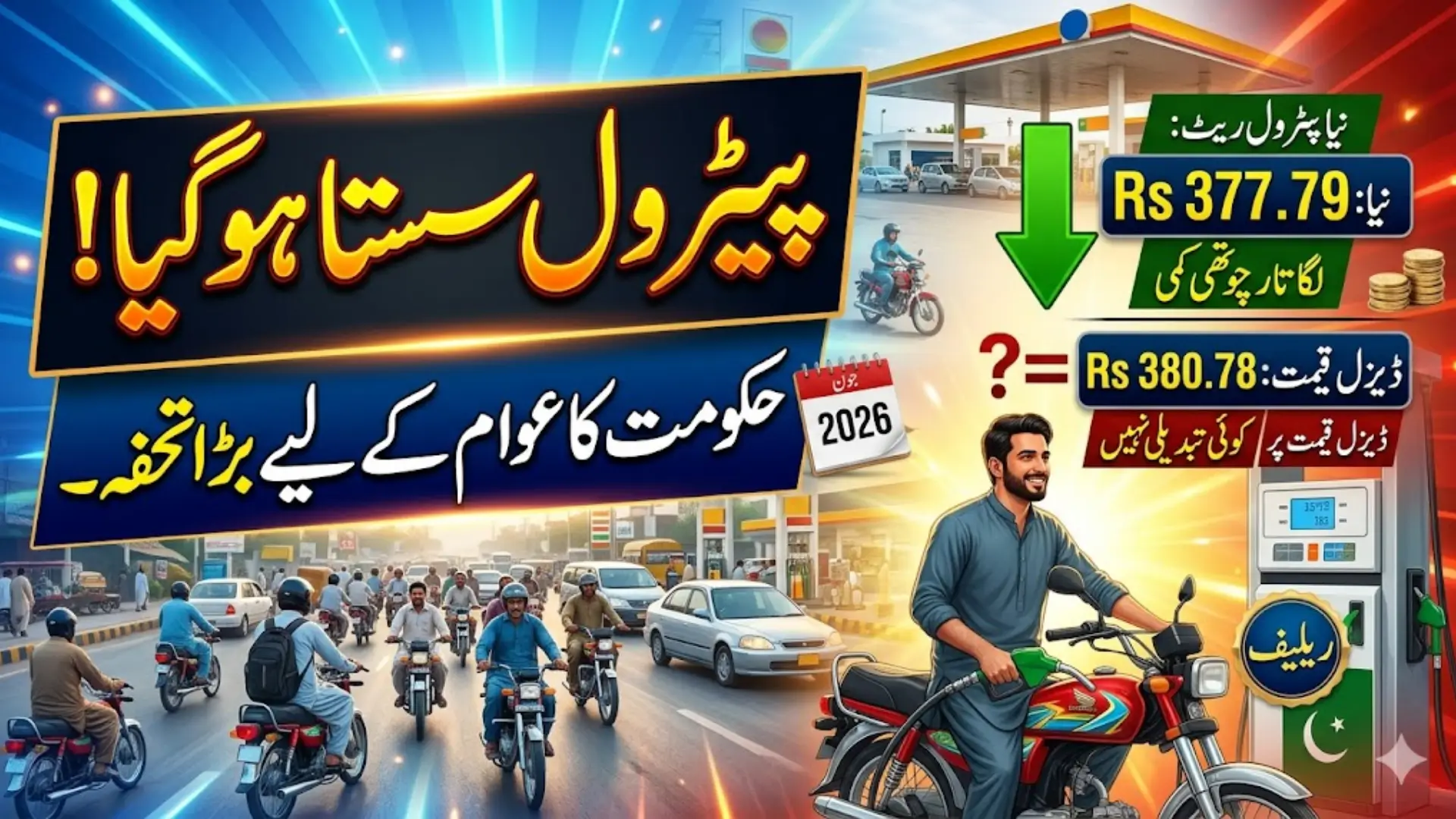
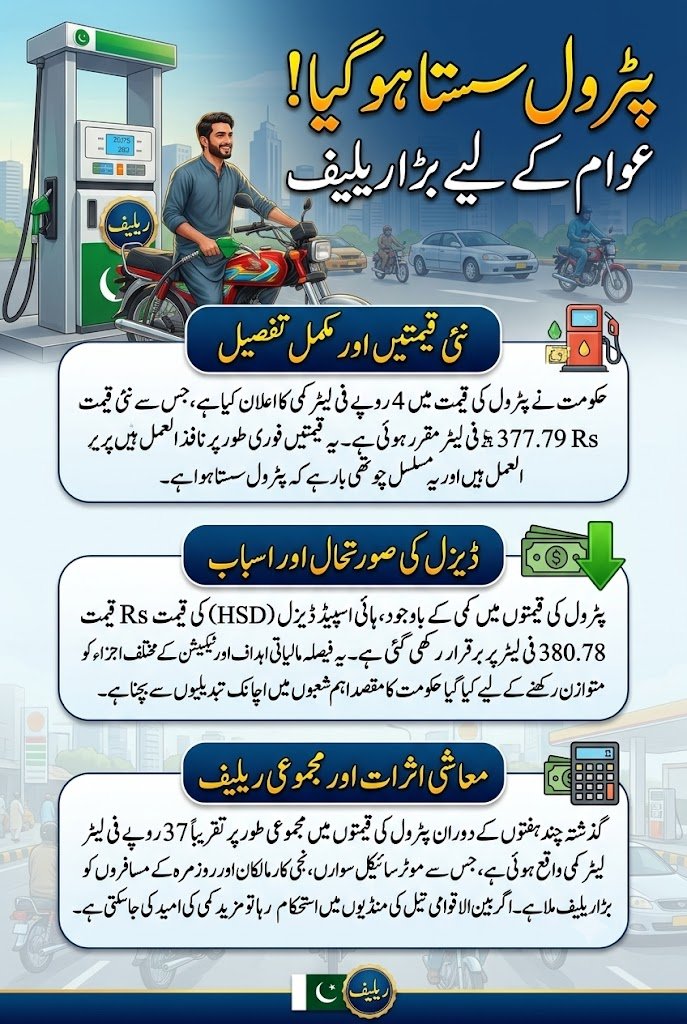
Govt Decrease Petrol Price Again federal government has once again announced relief for millions of Pakistanis by reducing the petrol price by Rs4 per litre. The latest decision comes as part of the weekly fuel price review and will remain effective until June 12, 2026. While petrol consumers have received another reduction, the price of high-speed diesel (HSD) has been kept unchanged despite expectations of a possible decrease.
This latest development is particularly important for motorcycle riders, private car owners, ride-hailing drivers, and daily commuters who have been struggling with rising living expenses over the past year. Fuel prices directly affect transportation costs, household budgets, and overall inflation in Pakistan. Therefore, every fuel price announcement attracts significant public attention.
What makes this announcement even more noteworthy is that it marks the fourth consecutive reduction in petrol prices. During the past few weeks, petrol prices have continuously moved downward, giving consumers cumulative relief of approximately Rs37 per litre. This trend has created hope among the public that fuel prices may continue to decline if international oil markets remain stable.
You Can Also Read: Big Relief for Farmers Punjab Launches
Government Announces Fresh Petrol Price Cut for June 2026
In its latest review of petroleum products, the government reduced the ex-depot price of petrol from Rs381.78 per litre to Rs377.79 per litre. The reduction of Rs4 per litre may seem modest at first glance, but when combined with previous cuts, it represents substantial savings for consumers who regularly use petrol-powered vehicles.
Across Pakistan, petrol remains the most commonly used fuel for personal transportation. Millions of motorcycles, cars, and small commercial vehicles rely on petrol every day. As a result, even a small reduction can provide noticeable financial relief to households that spend a large portion of their income on transportation.
The decision was taken after examining recent changes in international petroleum prices. Global oil market movements continue to influence local fuel prices, although taxes and government charges also play a significant role in determining the final rates consumers pay at fuel stations.
You Can Also Read: Budget 2026 Interest-Free E-Bikes and Taxi Scheme
Key Highlights of the Latest Fuel Price Revision
- Petrol price reduced by Rs4 per litre.
- New petrol price fixed at Rs377.79 per litre.
- Diesel price remains unchanged at Rs380.78 per litre.
- New rates effective immediately.
- Fourth consecutive reduction in petrol prices.
- Total petrol relief reaches approximately Rs37 per litre in recent weeks.
Latest Petrol and Diesel Prices in Pakistan
The latest revision has created a noticeable difference between previous and current fuel prices. While petrol users have received relief, diesel consumers will continue paying the same rate as before.
The government stated that adjustments under various pricing components were made to maintain diesel prices. Officials believe that keeping diesel prices stable helps manage fiscal targets while avoiding sudden changes in key sectors that heavily depend on diesel fuel.
| Fuel Type | Previous Price (Rs/Litre) | New Price (Rs/Litre) | Difference |
|---|---|---|---|
| Petrol | 381.78 | 377.79 | -4.00 |
| High-Speed Diesel | 380.78 | 380.78 | No Change |
The table shows that petrol consumers are the primary beneficiaries of the latest fuel price review, while diesel users have not received any immediate relief.
Fourth Consecutive Reduction Brings Major Relief to Consumers
The latest cut is not an isolated decision. It is part of a broader trend that has seen petrol prices decline continuously over the last four reviews. Combined together, these reductions have significantly lowered the cost of petrol compared to previous weeks.
For middle-class families, transportation expenses represent a major portion of monthly spending. Lower fuel prices can help families save money that can be used for groceries, education, healthcare, and other essential needs. This is especially important at a time when inflation continues to affect purchasing power across the country.
Many transport experts believe that sustained reductions in fuel prices can eventually contribute to lower transportation costs. However, the full impact often takes time to appear because businesses usually adjust prices gradually rather than immediately.
You Can Also Read: Fuel Subsidy Program Beneficiaries to Receive
Why Diesel Prices Remained Unchanged Despite Global Market Trends
One of the biggest questions following the announcement is why diesel prices were not reduced alongside petrol. According to available information, international price movements alone do not determine local diesel rates. The government also considers tax revenues, economic priorities, and pricing structures before making final decisions.
High-speed diesel is one of the most sensitive petroleum products in Pakistan’s economy. It powers trucks, buses, agricultural machinery, construction equipment, and industrial operations. Any significant change in diesel prices can directly influence transportation costs and the prices of essential goods across the country.
To prevent sudden economic disruptions and maintain revenue targets, authorities adjusted taxation and other pricing components, resulting in diesel prices remaining unchanged for another week.
Reasons Diesel Prices Were Maintained
- Revenue collection considerations.
- Adjustments in taxes and duties.
- Economic impact on transportation sector.
- Protection against sudden inflationary effects.
- Fiscal management objectives.
Global Oil Prices Continue to Shape Pakistan’s Fuel Market
Pakistan imports a large portion of its petroleum requirements, making local fuel prices highly dependent on international oil markets. Whenever global crude oil prices rise or fall, local authorities evaluate whether adjustments should be passed on to consumers.
Over the past several weeks, international petroleum prices have shown relatively favorable trends. These developments created room for the government to provide relief to petrol consumers. However, global prices are only one factor among many that influence local fuel rates.
Exchange rates, import costs, freight charges, petroleum levies, and customs duties all contribute to the final price displayed at fuel stations. This explains why local fuel prices do not always move in exact proportion to changes in international oil markets.
You Can Also Read: BISE Lahore Inter Part 1 Exams 2026
Heavy Taxes Continue to Influence Petrol Prices
Many consumers believe fuel prices should fall significantly whenever international oil prices decline. However, taxes and government charges remain one of the largest components of petrol pricing in Pakistan.
Currently, the government collects approximately Rs125 per litre on petrol through various taxes and levies. These charges include petroleum levy, customs duties, climate support levy, and other applicable components. As a result, a substantial portion of the amount paid by consumers does not represent the actual cost of fuel itself.
This taxation structure has become an important source of government revenue and plays a major role in funding national expenditures. Consequently, even when international prices decrease, consumers may not always receive the full benefit of those reductions.
Diesel Remains a Critical Revenue Generator
Like petrol, diesel also contributes significantly to government revenue. Authorities currently collect around Rs100 per litre through taxes, levies, duties, and related charges imposed on high-speed diesel.
Because diesel is heavily used in commercial transportation, authorities often approach diesel pricing more cautiously than petrol pricing. A major increase or decrease in diesel rates can have widespread consequences for supply chains and market prices.
This explains why diesel pricing decisions are frequently different from petrol pricing decisions, even when both products are affected by the same international market conditions.
You Can Also Read: Saudi Riyal To PKR Convert Currency
How Diesel Prices Affect Inflation Across Pakistan
Economic experts often describe diesel as one of the most inflation-sensitive products in the country. This is because diesel powers the trucks that transport food, construction materials, industrial goods, and consumer products throughout Pakistan.
When diesel prices increase, transportation costs also rise. Businesses then pass those higher costs on to consumers through increased product prices. This chain reaction eventually contributes to broader inflation across multiple sectors of the economy.
For this reason, policymakers closely monitor diesel pricing and often consider its wider economic impact before announcing any revisions.
You Can Also Read: NADRA Introduces New Digital System
Sectors That Depend Heavily on Diesel
- Freight transportation.
- Public transport services.
- Agriculture and farming.
- Construction industry.
- Manufacturing sector.
- Logistics and supply chain operations.
Petrol and Diesel Continue to Generate Massive Revenue
Petrol and diesel remain the country’s most important petroleum products in terms of consumption and revenue generation. Combined monthly sales are estimated between 700,000 and 800,000 tonnes, making them critical contributors to government income.
In contrast, products such as kerosene and light diesel oil account for much smaller volumes. Kerosene demand, for example, is only around 10,000 tonnes per month, highlighting the dominance of petrol and diesel in Pakistan’s energy market.
This heavy dependence on petroleum revenue explains why fuel pricing decisions are closely linked to broader fiscal and economic policies.
What the Latest Petrol Price Reduction Means for Ordinary Citizens
For millions of Pakistanis, the latest reduction provides welcome relief during a period of economic challenges. Motorcycle riders, office workers, students, and families who depend on personal transportation will benefit from lower fuel expenses.
Although a Rs4 reduction may not dramatically change monthly budgets on its own, repeated decreases over several weeks can result in meaningful savings. Households that regularly purchase petrol are likely to notice the difference over time.
Consumers will now be looking toward the next fuel price review, hoping that favorable international market conditions continue and lead to further reductions in petrol prices.
Conclusion
The government’s decision to reduce petrol prices by Rs4 per litre while keeping diesel prices unchanged marks another significant development in Pakistan’s fuel market. With petrol now priced at Rs377.79 per litre and diesel remaining at Rs380.78 per litre, consumers have received additional relief for the fourth consecutive review.
The cumulative reduction of approximately Rs37 per litre over recent weeks demonstrates how changing international oil prices can benefit local consumers. However, taxes, duties, and economic considerations continue to play a major role in determining final fuel prices. As Pakistan moves into the next review period, both consumers and businesses will be closely watching global oil trends and government decisions regarding future fuel rates.